> ## Documentation Index
> Fetch the complete documentation index at: https://docs.prophecy.ai/llms.txt
> Use this file to discover all available pages before exploring further.
# ORC
> Parameters and properties to read from and write to ORC files
Dependencies:
* ProphecySparkBasicsPython 0.0.1+
* ProphecySparkBasicsScala 0.0.1+
Cluster requirements:
* UC dedicated clusters 14.3+ supported
* UC standard clusters 14.3+ supported
* Livy clusters 3.2.0+ supported
The ORC (Optimized Row Columnar) file type:
* Is a columnar file format designed for Spark and Hadoop workloads.
* Offers high compression ratios, which helps reduce storage costs.
* Optimizes for large streaming reads, but with integrated support for finding required rows quickly.
* Is type-aware, which means it can choose an encoding for the type and builds an internal index while you write to the file.
## Parameters
| Parameter | Tab | Description |
| --------- | ---------- | --------------------------------------------------------------------------------------------------------------------------------------------------------------------------------------- |
| Location | Location | File path to read from or write to the ORC file. |
| Schema | Properties | Schema to apply on the loaded data. In the Source gem, you can define or edit the schema visually or in JSON code. In the Target gem, you can view the schema visually or as JSON code. |
## Source
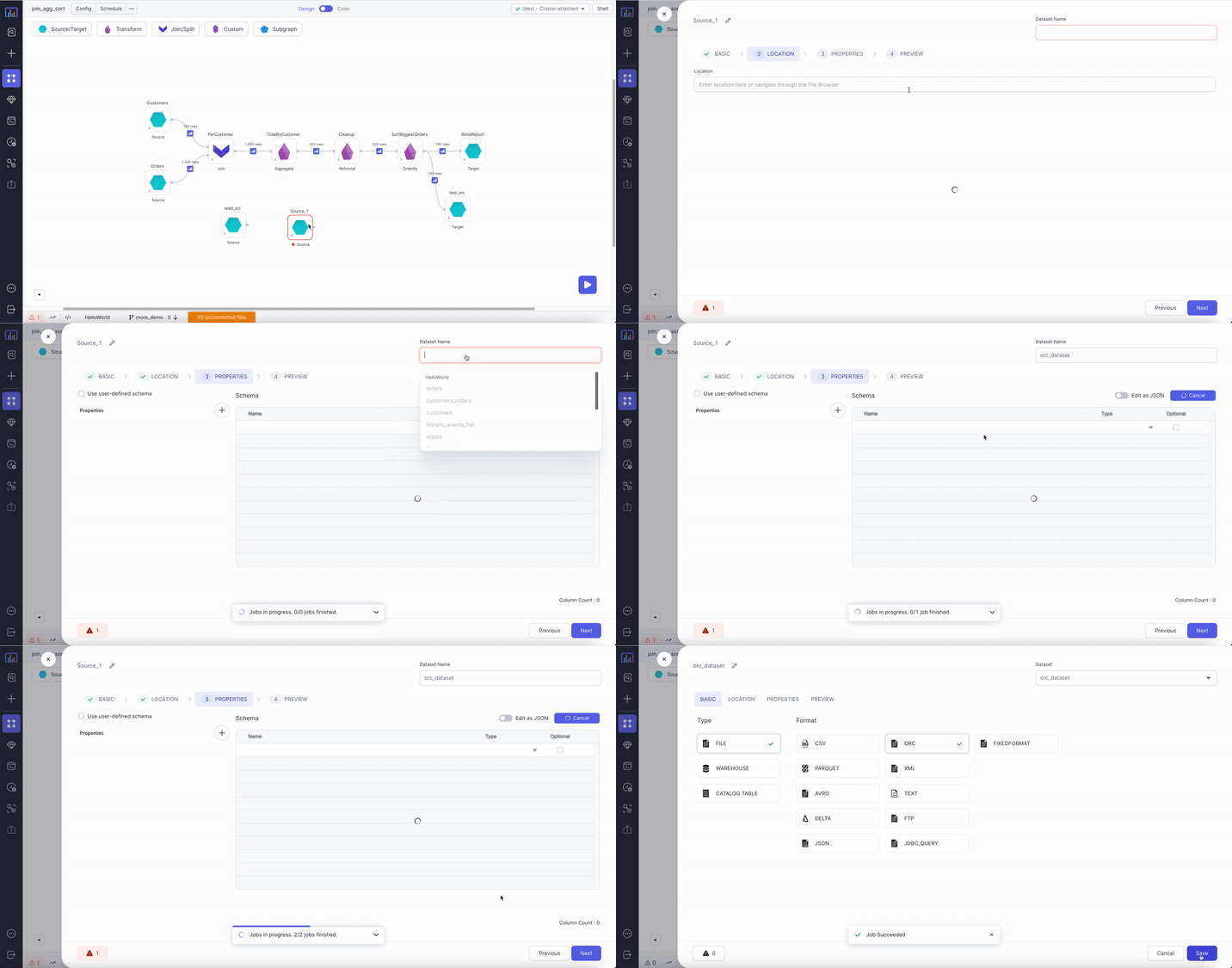
The Source gem reads data from ORC files and allows you to optionally specify the following additional properties.
### Source properties
| Property name | Description | Default |
| ----------------------- | ----------------------------------------------------------------------------------------------------------------------------------------------------------------------------------------------------------- | ------- |
| Description | Description of your dataset. | None |
| Use user-defined schema | Whether to use the schema you define. | false |
| Recursive File Lookup | Whether to recursively load files and disable partition inferring. If the data source explicitly specifies the `partitionSpec` when the`recursiveFileLookup` is `true`, the Source gem throws an exception. | false |
### Example
 ### Compiled code
To see the compiled code of your project, [switch to the Code view](/data-engineering/development/pipelines/pipelines#project-editor) in the project header.
```python example.py theme={null}
def read_orc(spark: SparkSession) -> DataFrame:
return spark.read\
.format("orc")\
.load("dbfs:/FileStore/Users/orc/test.orc")
```
```scala example.scala theme={null}
object read_orc {
def apply(spark: SparkSession): DataFrame =
spark.read
.format("orc")
.load("dbfs:/FileStore/Users/orc/test.orc")
}
```
***
## Target
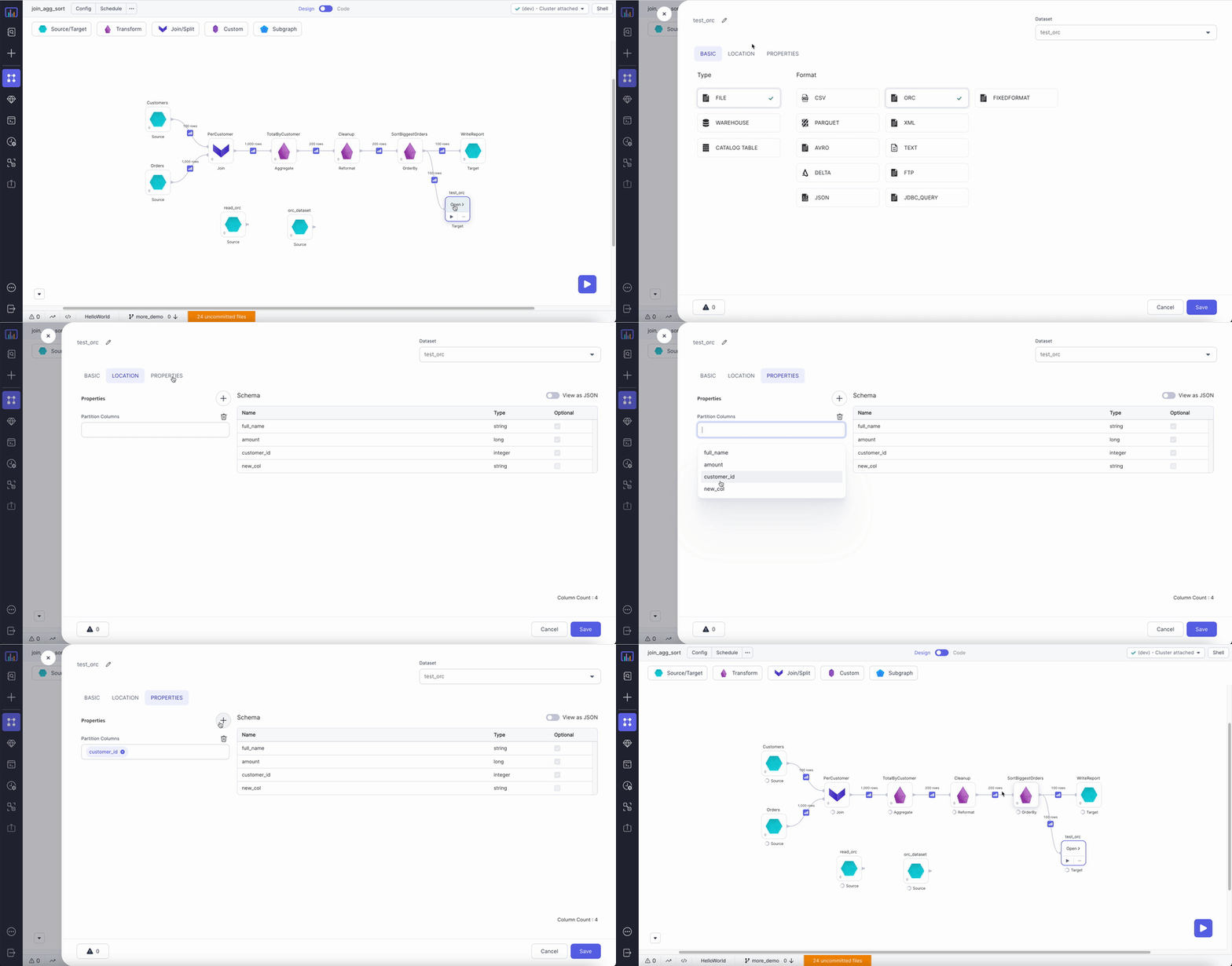
The Target gem writes data to ORC files and allows you to optionally specify the following additional properties.
### Target properties
| Property name | Description | Default |
| ----------------- | -------------------------------------------------------------------------------------------------------------------------------- | -------- |
| Description | Description of your dataset. | None |
| Write Mode | How to handle existing data. For a list of the possible values, see [Supported write modes](#supported-write-modes). | `error` |
| Partition Columns | List of columns to partition the ORC files by. | None |
| Compression Codec | Compression codec when writing to the ORC file. The ORC file supports the following codecs: `none`, `snappy`, `zlib`, and `lzo`. | `snappy` |
### Supported write modes
| Write mode | Description |
| ---------- | ----------------------------------------------------------------------------------------------------------------------------------------------- |
| error | If the data already exists, throw an exception. |
| overwrite | If the data already exists, overwrite the data with the contents of the `DataFrame`. |
| append | If the data already exists, append the contents of the `DataFrame`. |
| ignore | If the data already exists, do nothing with the contents of the `DataFrame`. This is similar to the `CREATE TABLE IF NOT EXISTS` clause in SQL. |
### Example
### Compiled code
To see the compiled code of your project, [switch to the Code view](/data-engineering/development/pipelines/pipelines#project-editor) in the project header.
```python example.py theme={null}
def read_orc(spark: SparkSession) -> DataFrame:
return spark.read\
.format("orc")\
.load("dbfs:/FileStore/Users/orc/test.orc")
```
```scala example.scala theme={null}
object read_orc {
def apply(spark: SparkSession): DataFrame =
spark.read
.format("orc")
.load("dbfs:/FileStore/Users/orc/test.orc")
}
```
***
## Target
The Target gem writes data to ORC files and allows you to optionally specify the following additional properties.
### Target properties
| Property name | Description | Default |
| ----------------- | -------------------------------------------------------------------------------------------------------------------------------- | -------- |
| Description | Description of your dataset. | None |
| Write Mode | How to handle existing data. For a list of the possible values, see [Supported write modes](#supported-write-modes). | `error` |
| Partition Columns | List of columns to partition the ORC files by. | None |
| Compression Codec | Compression codec when writing to the ORC file. The ORC file supports the following codecs: `none`, `snappy`, `zlib`, and `lzo`. | `snappy` |
### Supported write modes
| Write mode | Description |
| ---------- | ----------------------------------------------------------------------------------------------------------------------------------------------- |
| error | If the data already exists, throw an exception. |
| overwrite | If the data already exists, overwrite the data with the contents of the `DataFrame`. |
| append | If the data already exists, append the contents of the `DataFrame`. |
| ignore | If the data already exists, do nothing with the contents of the `DataFrame`. This is similar to the `CREATE TABLE IF NOT EXISTS` clause in SQL. |
### Example
 ### Compiled code
To see the compiled code of your project, [switch to the Code view](/data-engineering/development/pipelines/pipelines#project-editor) in the project header.
```python example.py theme={null}
def write_orc(spark: SparkSession, in0: DataFrame):
in0.write\
.format("orc")\
.mode("overwrite")\
.save("dbfs:/data/test_output.orc")
```
```scala example.scala theme={null}
object write_orc {
def apply(spark: SparkSession, in: DataFrame): Unit =
in.write
.format("orc")
.mode("overwrite")
.save("dbfs:/data/test_output.orc")
}
```
### Compiled code
To see the compiled code of your project, [switch to the Code view](/data-engineering/development/pipelines/pipelines#project-editor) in the project header.
```python example.py theme={null}
def write_orc(spark: SparkSession, in0: DataFrame):
in0.write\
.format("orc")\
.mode("overwrite")\
.save("dbfs:/data/test_output.orc")
```
```scala example.scala theme={null}
object write_orc {
def apply(spark: SparkSession, in: DataFrame): Unit =
in.write
.format("orc")
.mode("overwrite")
.save("dbfs:/data/test_output.orc")
}
```